Workshop Air Quality
Broad factory ventilation isn't always enough for high-intensity tasks. Protecting worker comfort and safety in dedicated work areas requires targeted, localized extraction.
The Challenge of Localized Tasks
In large open-plan factories, certain activities create highly concentrated zones of contamination. Welding, grinding, mixing, or parts cleaning generate intense bursts of airborne particles, fumes and contaminants. Relying solely on general workshop ventilation to dilute these clouds is inefficient and exposes operators to harmful breathing conditions.
Instead of trying to clear the entire room after the smoke has already dispersed, the goal is to capture the contaminant the moment it is generated.
Localized Extraction and Extraction Points
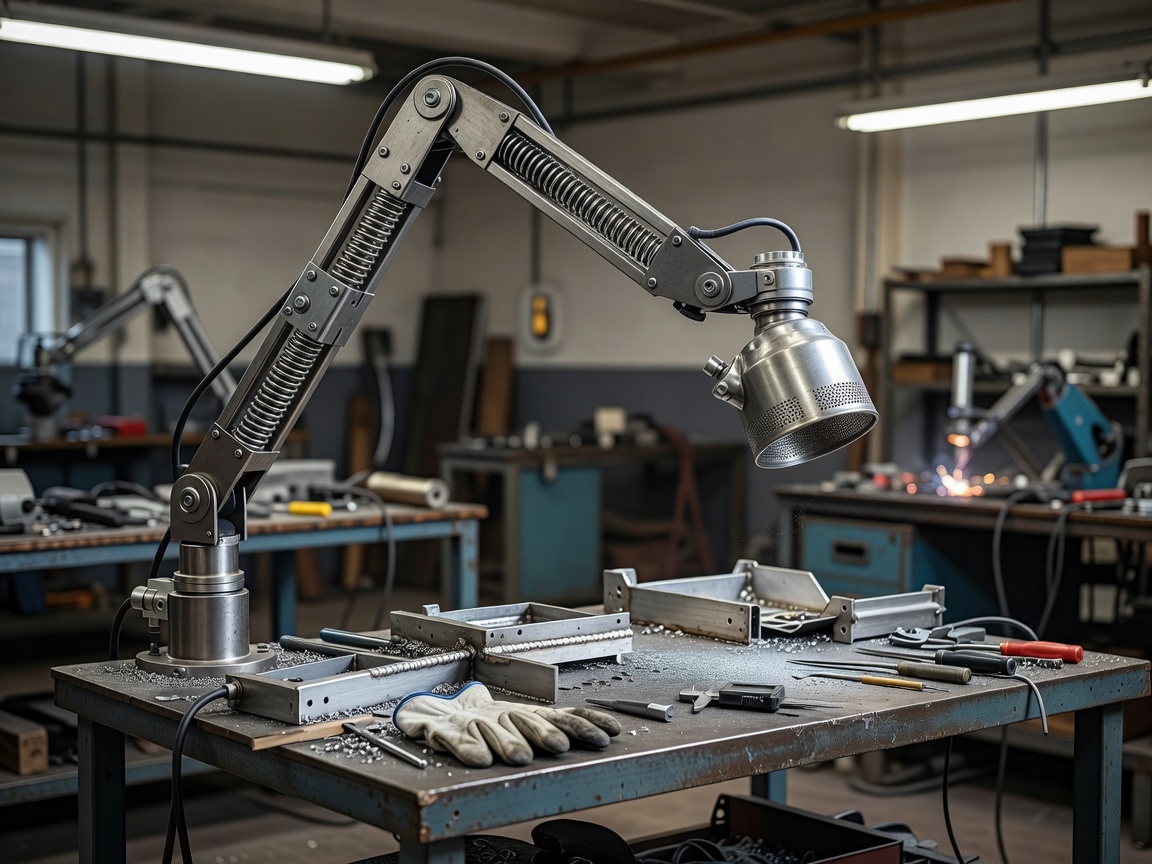
The core of superior workshop air quality is Local Exhaust Ventilation (LEV), or localized extraction. By placing extraction points directly at the source—such as articulated extraction arms, downdraft tables, or fume hoods—you grab the particulate before it reaches the worker's breathing zone.
- Articulated Arms: Ideal for varying workpieces where the operator can physically move the hood close to the weld or grind point.
- Downdraft Tables: Perfect for sanding or grinding flat parts, pulling dust down and away from the face.
- Canopy Hoods: Useful over hot processes that naturally create a thermal updraft.
Optimizing Ventilation Layouts for Work Areas
Designing ventilation layouts for workshops requires careful consideration of operator movement. An extraction hood is useless if it constantly gets in the way of the crane hoist or blocks the operator's line of sight. Practical improvements often involve balancing extraction power with physical ergonomics.
Furthermore, capturing these fumes locally prevents them from migrating into cleaner assembly zones. This micro-management of airflow profoundly impacts overall worker comfort. Nobody wants to spend their eight-hour shift smelling the solvent bay from three aisles over.
Maintenance and Ongoing Practical Improvements
Like any environmental system, workshop extraction relies heavily on user compliance and routine upkeep. Operators must be trained to position flexible arms correctly (typically within a few inches of the source, not a foot away). Meanwhile, the maintenance team needs to ensure the ductwork connecting these localized hoods remains free of buildup.
Combining localized capture with robust filtration and verifying performance with air monitoring sensors ensures that your workshop remains a safe, productive environment.
Upgrading a specific work cell?
We design custom localized extraction solutions that fit seamlessly into your operators' daily workflow.
Discuss Workshop Solutions