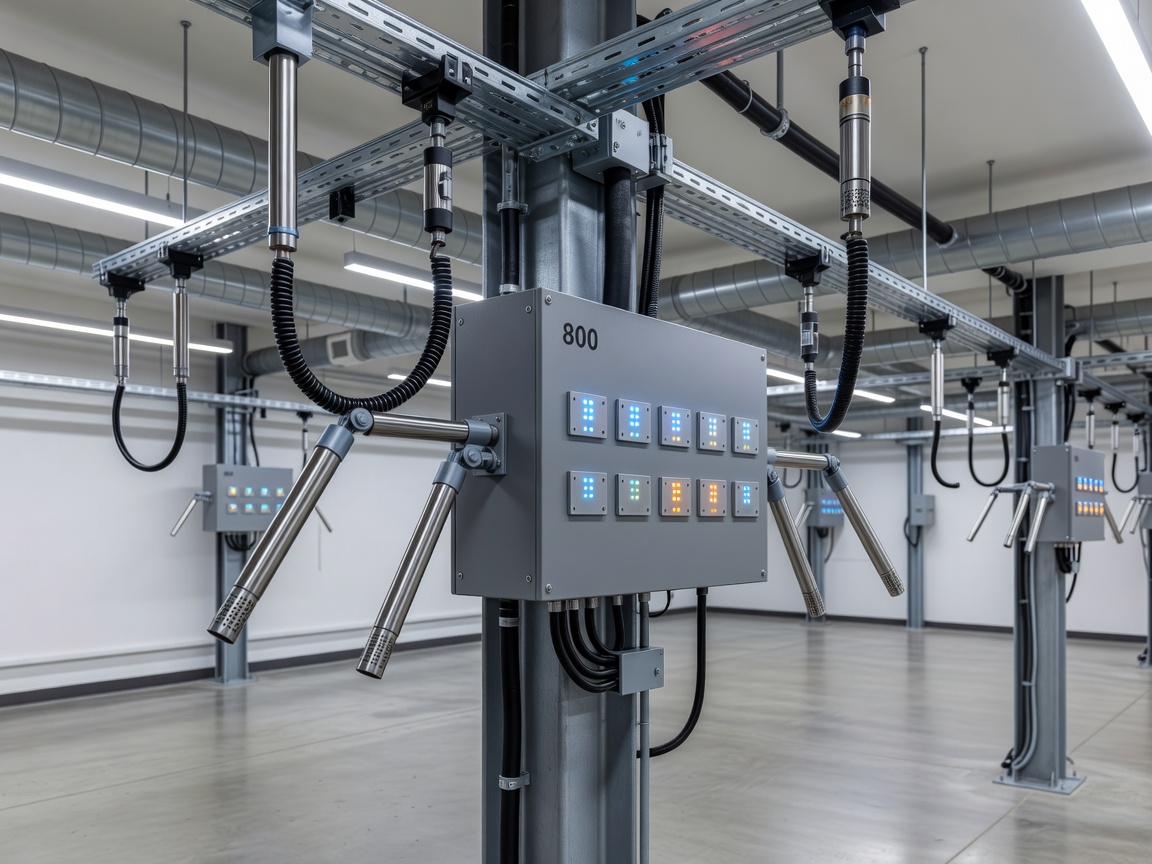
Industrial Air Monitoring
You can't manage what you don't measure. Establishing a robust air-quality monitoring system gives you actionable data on environmental measurements, ensuring workplace safety and system efficiency.
The Role of Continuous Measurement
In a modern manufacturing environment, air quality fluctuates constantly. Changes in production schedules, seasonal temperature shifts, and the gradual degradation of filters all impact the atmosphere. Periodic manual testing only provides a snapshot; continuous air-quality monitoring delivers a motion picture of your facility's health.
By deploying an array of sensors, we establish monitoring zones that continuously track particulates (PM2.5, PM10), volatile organic compounds (VOCs), temperature, and humidity. This data is the foundation of intelligent facility management.
Strategic Sensor Placement
Slapping a sensor on the wall of a manager's office won't tell you what the operators are breathing on the floor. Sensor placement is a science. Sensors must be placed within the actual breathing zones of workers, as well as near known contaminant sources.
- Source Monitoring: Sensors placed immediately adjacent to processes (like welding or chemical mixing) to catch emission spikes.
- Ambient Monitoring: Broad coverage across general factory areas to ensure baseline environmental measurements remain stable.
- Exhaust Monitoring: Placed in ductwork to measure what is being extracted and assess filter performance.
Data Interpretation and Trend Monitoring
Raw data is useless without interpretation. If a sensor reads 150 µg/m³ of particulate matter, what does that mean for your operations? We help facilities set up reporting systems that turn raw numbers into clear trend monitoring graphs. By analyzing trends over days, weeks, and months, you can identify hidden issues—perhaps a particular shift is generating more dust, or a specific machine's extraction hood is failing.
Inspection Routines and System Maintenance
Monitoring systems themselves require upkeep. Sensors drift out of calibration. Dust can clog sample intakes. We advocate for strict inspection routines where monitoring hardware is cleaned and recalibrated periodically. Reliable reporting depends entirely on the accuracy of the underlying environmental measurements.
Limitations of Monitoring Systems
It's important to understand the limitations of monitoring systems. A sensor will tell you that the air is poor, but it won't fix it. It is an diagnostic tool, not a remedy. High readings must trigger an operational response, usually tied back to adjusting your factory ventilation or scheduling ventilation maintenance. They are a crucial piece of the puzzle, providing the visibility needed to optimize the entire clean air infrastructure.
Need visibility into your facility's air quality?
Let's map out a monitoring strategy tailored to your specific environmental concerns.
Request a Monitoring Plan